
| Event feature | What it means | Planning use |
|---|---|---|
| Face-to-face booth conversations | Recruiters can assess candidates in real time | Prepare a short spoken introduction as well as a resume. |
| Published company list and open positions | The event website shows which employers attend and what they are hiring for | Shortlist target companies before you arrive. |
| Few on-the-spot hires | The realistic aim at a booth is an invitation to an in-house interview | Judge each visit by the follow-up it earns, not by an immediate offer. |
| Hundreds of attendees, experienced and inexperienced | The field is mixed and booths can be busy | Visit priority booths first and keep each conversation focused. |
Guidance in the table comes from the TechMeetups job-seeker guide and Dreamcast’s overview of in-person job fairs.
Tech jobs under the big top event is best understood as an in-person recruiting event in a tent-style venue. Candidates meet employers face to face, and the realistic aim is an interview invitation rather than an instant offer.
For a broader view of what each role involves, see the guide to tech jobs. This article covers the event route into them and how to work the floor.
What an in-person hiring event changes for a job seeker
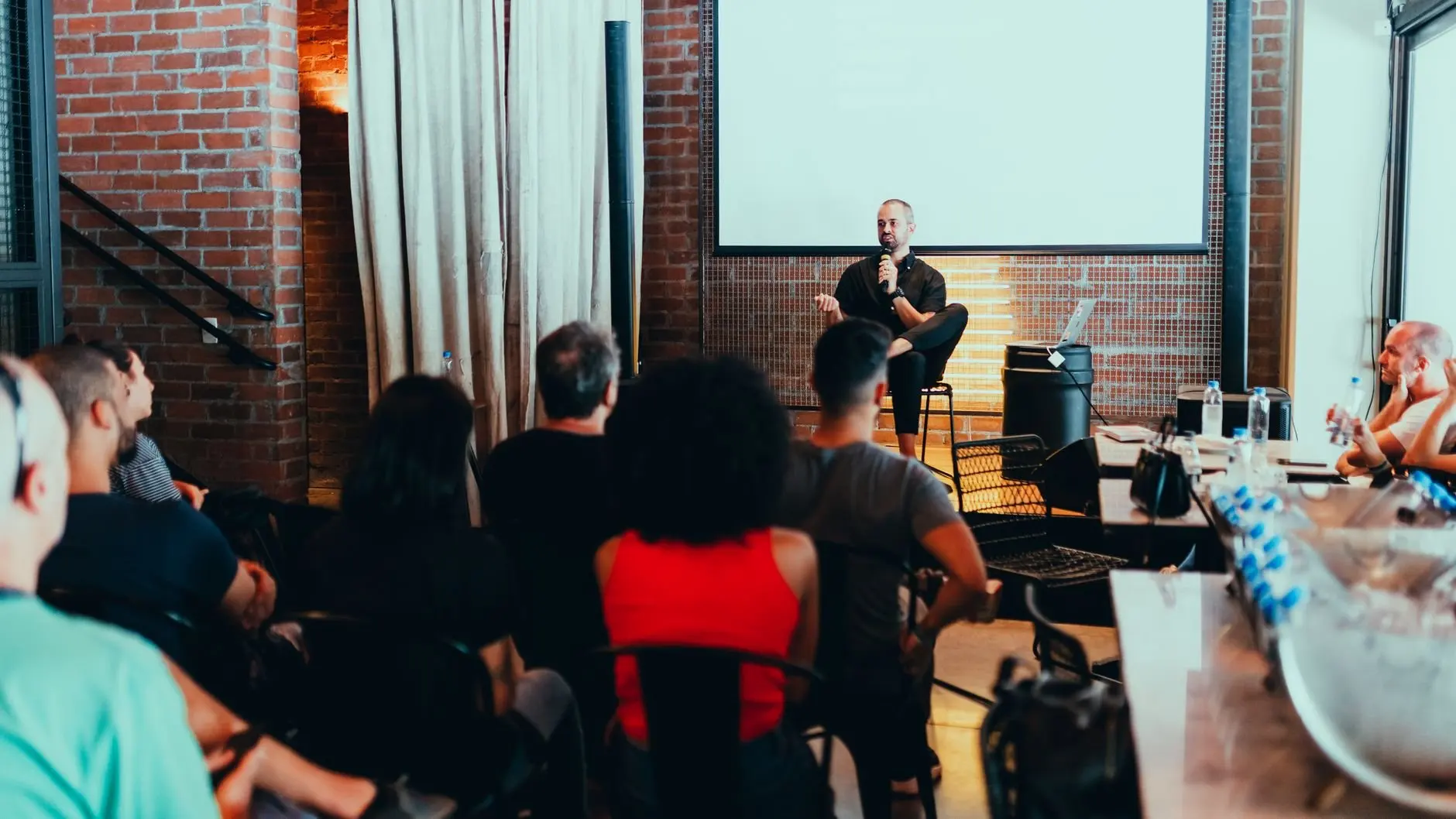
An event of this kind compresses the early stages of hiring into a single session. Instead of submitting an application and waiting, a candidate speaks to the employer directly. That raises the stakes of each short conversation, and it rewards people who have planned their time.

Each booth works like a short interview
LinkedIn’s advice on preparing for a tech job fair puts it bluntly: career fairs are not networking events but job interviews in disguise. TechMeetups adds that few job seekers are hired on the spot, and that the goal at a booth is to be asked back for an in-house interview. Together these point to a clear way of working:
- Speak as you would in a first screening. Be ready to say what you do, what you are looking for and why this employer, rather than browsing casually.
- Measure success by follow-up. A named contact and an invitation to interview is a better result than a stack of branded giveaways.
- Do not plan around an offer. Treat the event as the start of a process that continues by email, phone and later interviews.
Why the setting matters
Dreamcast notes that an in-person job fair facilitates personalised and genuine connections between recruiters and attendees. For a candidate, the practical consequence is that tone, preparation and manner are visible in a way a résumé upload cannot show. That helps people who communicate well in person, and it means a candidate with a strong profile but little preparation can lose ground to a better-prepared one.

Roles and employers to look for
The most reliable guide to who is hiring is the event’s own listing. TechMeetups advises candidates to check the event website for all companies listed and their open positions. That list shows which employers and which roles are actually on offer, and it should shape which booths you prioritise.
Engineering and technical roles
Software engineers sit at the centre of tech hiring events. Rakuna describes hackathons as a go-to event for companies hiring technical talent such as developers, engineers, and data scientists. A candidate in these fields should expect to be asked about technical work, so have a project or two ready to describe in plain language.
Entry-level candidates
The same Rakuna piece calls career fairs ideal for sourcing entry-level talent, such as students or recent graduates. For early-career candidates, that makes a fair a sensible place to start, because employers there are already open to people without a long track record.
Roles beyond engineering
Not every route into a tech employer runs through code. SVSB notes that marketing, operations, and project management roles at event companies can be great entry points into the industry. That comment concerns event-industry employers specifically, so use it as a prompt rather than a promise.
- Marketing. Suits candidates who can show campaign, content or communication work.
- Operations. Suits people who like keeping logistics and processes running.
- Project management. Suits candidates who can show they coordinate people and deadlines.
Check the positions list for these titles before the event. If a company lists only engineering roles, a booth conversation is the place to ask whether other teams are hiring.
It is also worth watching employers’ own sites. SVSB says many event companies post jobs on their own sites before, or instead of, job boards. A company seen at a booth may therefore have more openings on its careers page than the event list shows.
Preparing before the event
Preparation is where candidates gain the most, because the floor itself leaves little time for research. Good preparation also makes conversations specific, which recruiters tend to remember.
- Study the company list. Match your skills to the open positions each employer has listed, and note which booths matter most to you.
- Look for the attendee list. LinkedIn’s guidance says almost every event publishes attendees ahead of time, so you can identify who will be there and what they do.
- Tidy your LinkedIn profile. SVSB reports that many hiring managers check candidates’ LinkedIn activity before reaching out, so an out-of-date profile can undercut a good conversation.
- Plan the journey. TechMeetups advises checking the venue on the map to find the easiest way to arrive. For an unconventional venue such as a tent, this matters more, since a late or flustered arrival eats into booth time.
What to bring and say at the booth
Resumes and contact details
TechMeetups tells candidates to prepare a sufficient number of resume copies for every company they are interested in. Bring more than you expect to use, and keep them flat and clean in a folder. A printed resume gives a recruiter something to annotate during the conversation, which helps when they are speaking to many people.
Also collect something in return. The guide recommends requesting a business card or obtaining a contact name, phone number and email address. Without a name and an address, a thank-you note has nowhere to go.
Greeting and conversation
The advice here is simple and practical. TechMeetups suggests greeting each employer with a firm handshake and making eye contact. It also advises candidates to determine the highest-level employer representative in the booth, since that person is usually best placed to decide who gets invited back.
Order matters as well. The guide says to visit first the booths that interest you most, and to avoid wandering without a plan. Strong candidates arrive with a route: priority employers first, then others as time allows. That way the best conversations happen while you are fresh and the recruiters are not yet tired.
How it differs from job boards and standard career fairs
A job board lets you apply to many roles with little effort, but it offers no live contact. An in-person event reverses the trade-off. Dreamcast observes that being physically present helps recruiters assess candidates in real time, and that virtual events lack the life-like experience and immediacy of in-person interactions.
Convenience is the main argument for staying online. Rakuna notes that virtual career fairs eliminate travel expenses for both employers and candidates. If cost or distance rules out attending, an online fair is a reasonable substitute. If you can travel, the live format gives you the edge that a screen cannot.
Against a standard career fair, the booth mechanics are the same, and so is the preparation described above. What a big-top setting adds is a distinctive venue, which makes the map and commute check more important. It does not change the basic task of earning an interview invitation.
Networking and follow-up
Although booths are interviews first, events also bring people together informally. Rakuna points out that networking events reach passive candidates, meaning people who might not actively be seeking jobs. That is useful for employed engineers and other professionals who are open to a move but are not applying anywhere. Dreamcast likewise links in-person fairs to genuine connections, so talking to people near the booths can be worthwhile.
The conversation does not end when you leave. TechMeetups recommends writing personalised thank-you letters to companies that interest you. Use the contact details you collected, mention something specific that was discussed, and keep the message short. A tailored note helps a recruiter place you among the many candidates they met.
Frequently asked questions
Should I ask about pay when I first speak to a recruiter?
No. TechMeetups advises against asking about salary and benefits in the first conversation and suggests waiting until later in the process for those questions.
Is this kind of event only for experienced engineers?
No. TechMeetups describes its job fairs as an opportunity for experienced and inexperienced job seekers alike. Rakuna adds that career fairs are well suited to students and recent graduates.
How many companies should I aim to speak to?
LinkedIn’s guidance suggests targeting about five companies and doing your best to talk to each of them. A short, researched list tends to produce better conversations than trying to visit every booth.